Information on our Mushroom Genetics
Here you can find the preferred temperature and substrate for each genetic we sell. Mushrooms, like us humans, have different personalities. Some grow thick, and other very thin with barely visible mycelium. Some prefer cold temperatures and others hot. Please read all the information we think is essential for you to know before you make an informed decision on which variety to grow.
Cold growing variety have higher gestation period, that is the mycelium will colonise very fast but will take time to fruit.
Warmth loving variety colonises quicky and also fruit quickly.
Mushrooms can be divided into 4 categories but we will focus on these 3:-
- Saprotrophs-
- Mycorrhizae-
- Parasites-
Food preference-Mushrooms that we grow indoors generally love either wood or manure/compost or Straw and are all Saprotrophs.
Wood-loving mushrooms take a long time to digest the wood and derive enough energy to propagate. Therefore all the indoor mushrooms we grow are supplemented. We use supplements like Soy pellets, bran etc. The supplementation can be as high as 50%.
The most popular recipe that uses supplements is Masters mix(50% Hardwood Sawdust and 50% Soy Pellets).Soy pellets are a supplement which is an agricultural waste and feed for animals like horses. Mycelium consumes them quickly as they are easy to digest and fruit really fast.
All wood-loving varieties are grown on Masters Mix by mushroom farmers with the exception of Shiitake, which is grown on a mix of 80% hardwood and supplemented by 20% bran. Master’s Mix is an equal blend of hardwood sawdust and soy pellets. This mix is either super pasteurised by applying steam over 12+ hours or sterilised in a pressure cooker.
A beginner grower would not have a steam pasteurising unit or a pressure cooker.That is why oyster mushrooms are recommended for beginners as they can be grown in medium like straw or sugar cane mulch.Both of these are very low on nutrition and can be pasturside by Calcium hydroxide and water. If you use hot water along with Calcium hydroxide, this method is called super pasturisation.We receommend to super pasturise your growing medium and grow mushrooms on them.
It is essential to maintain humidity during fruiting, most of the variety will fruit when the water eveoporates from the surface of the substrate making it cooler which induces fruiting.That is why you see mushroom fruiting in wild 2-3 days after rain.There are some exception though Wine cap and Portobello will fruit due to microbrial activity on the surface of teh mycelium which will trigger pinset development.Therefore its necessary to case the substrate.
When Baby mushrooms(Pins) start to come it is essential to drop humidity or stop spraying water on them. Continuing that would lead to pinset stating to get rotten and ultimately being abpndoned by the mycelium.
We recommend 6500 K light for all mushroom grows, the brighter the light during growing phase(No direct sunlight) more vivid and brighter the mushroom would look. For example a low light would give you salmon pink mushroom and good light would give you dark almost reddish pink oyster.
Putting your mushrooms to dry in sunlight increases its vitamin D content substantially, some researchers found Enoki and Oysters had the most increase in Vitamin D content followed closely by Portobello(Small) and Shiitake.
Include this in Paddy Straw-Very weak myceloium but fruits in less than a week.USe straw or Sugarcane mulch as substrate. GRain straw like wheat straw is better than pea straw but use what you can get. People also supplement it with any pulse powder. Pasturise your straw in calcium hydroxide and hot water and you should be all good to grow them.They only fruit when temperatures are really hot, do not store the mycelium in fridge. Best way we fruited them was through fermenting the wheat sraw and mix of sugar cane much in water for 3 days(just soak them) growing them ijn a laundry basket with lot of holes, adding wheat bran powder and sawn on top. They grow very fast this way.No need to pasturise if growing outside, if growing them inside the house, pasturiseation is needed(with hot water and calcium hydroxide).
Mushroomsof paddy straw forms in eggs and its a remarkabe mushroom to see fruiting and eggs ahatching just cool. Experience wise these mushrooms blew us away.They have a very silky texture specially if harvested young.We are in love with how meaty and savoury they are.
Whnen preparing your spawn, always use millets as they provide the most surface are exposure when colonised with mycelium because of how small they are, they are not rich as Rye in terms of nutrition but teh substrate you are using is rich enough to provide nutrition to mushrooms.
When you look at what bran to use for supplementation, effectuveness wise wheat bran surpasses the oat bran and all the other.Bran is a nitrogen suppleement for mushrooms and provide quick energy boost. Its like us on coffee.
Shocking mycelium via cold shock.
You can also
Please find important information on different mushrooms below;
We want to give special thanks to Will Borowski at Forest fungi to supply numerous great wild cloned cultures and for hands on knowledge about log cultivation and knowledge on composted wood substrate and information on Australian native trees.
Mycelia in Belgium, Paul Stamets with his fantastic book Growing gourmet and medicinal mushrooms and The mushroom Cultivator. Peter McCoy for his book Radical Mycology.
Selby Mushrooms for rare and hard to find wild cloned Australian Native mushrooms.
Our thanks also goes to our customers who has supplied us with Australian native Shiitake and also to the online community at inaturalist.
Talk about primary and secondary decomposer
Oyster mushrooms, Shiitake, Maitake and Reishi mushrooms are primary decomposers. Secondary Decomposers– work together with many bacteria and other fungi in the soil and in compost piles to continue to break down organic matter that has already been partially broken down by primary decomposers.
Talk about mycorizaeh, saprophytic and other kind of mushroom
Explain phase 2 manure
What is phototropic mushroom
Do not consume mushrooms for the medicinal bemifit you are looking for without consulting doctor first.
Information mentioned may be wrong, incimplete or being updated.Please do not reply on this infi and do your own research.Most of the infiormation is cut short to be able to fit consisly , so if you want to know more infi on any variety please use the pointers and look for more infirmation on terminolgy used.
What is primordia formation, spawn run and fruiting
Lower thhe light level the lighter would be the colour of the mushroom, to get bright vibrant colour, increase the light levels.
Higher the co2 shorter the caps.
Temperature range differs and is just a guide, take it as a +5_5 , most mushrooms are extremly adjustable.
Most msuhrooms have some sort of reserched medicnal benefit, We still categorose them as gourmet or medicinal depending on how they are usually used and amount of medicinal compunds it has.

Yellow Oyster
Pleurotus Citrinopileatus
Also known as Golden Oyster
Information-Mushroom that loves summer like every Aussie, Mycelium starts White but will turn light yellow as it matures. Some people describe the smell of yellow oyster as peppery.
Difficulty level:Easy
Fruiting Temperature: 20°- 30°C, grow in Summer
Fruiting Style: Side Fruiting
Preferred Substrate-Oysters are not picky, they will grow literally on anything Softwood or hardwood Sawdust, Straw, Sugarcane mulch or Masters mix.
Permitted in WA?-
BEst to grow them in food safe bucket after cold pasturising straw or sugar cane mulch..
The culture of this specie cannot be kept in fridge
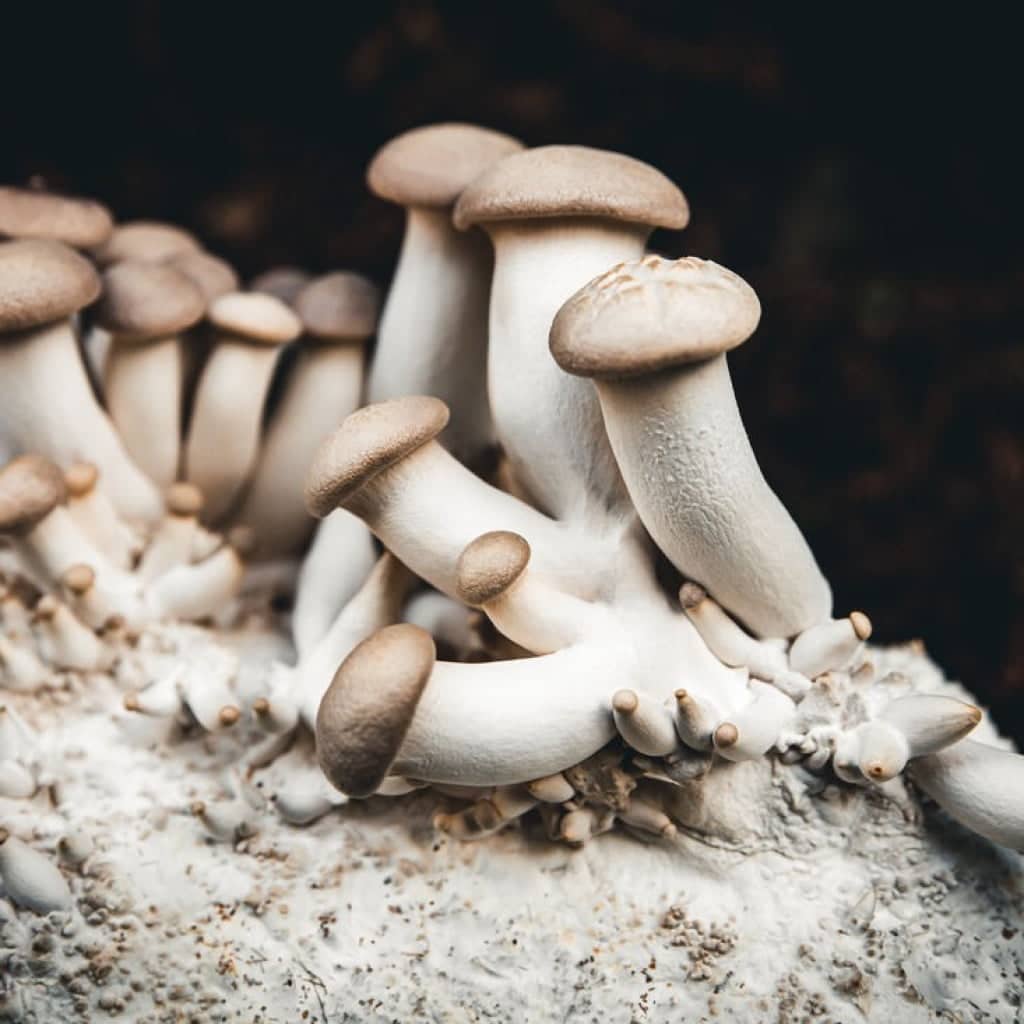
Giant King Oyster
Pleurotus Eryngii
Also known as King Trumpet Mushroom, French Horn Mushroom or Trumpet Royale
Information-
Difficulty level:
Fruiting Temperature: 15°- 20°C
Fruiting Style: Top Fruiting
Colonisation time
Fruiting time-
Preferred substrate- King oysters grows really well
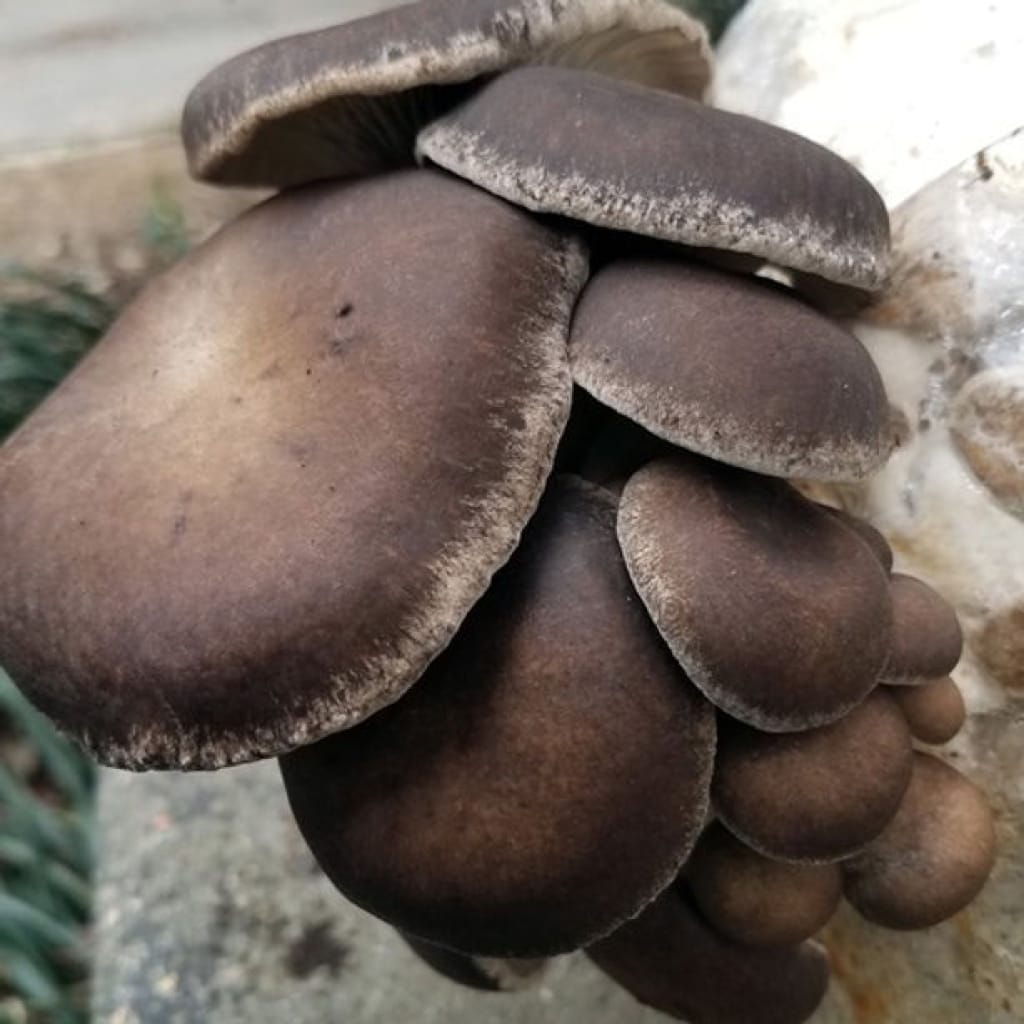
Pearl Giant
This is a summer variety of Blue pearl oyster
Information-
Difficulty level:
Fruiting Temperature: 15°- 24°C
Fruiting Style: Side Fruiting
Colonisation time
Fruiting time-
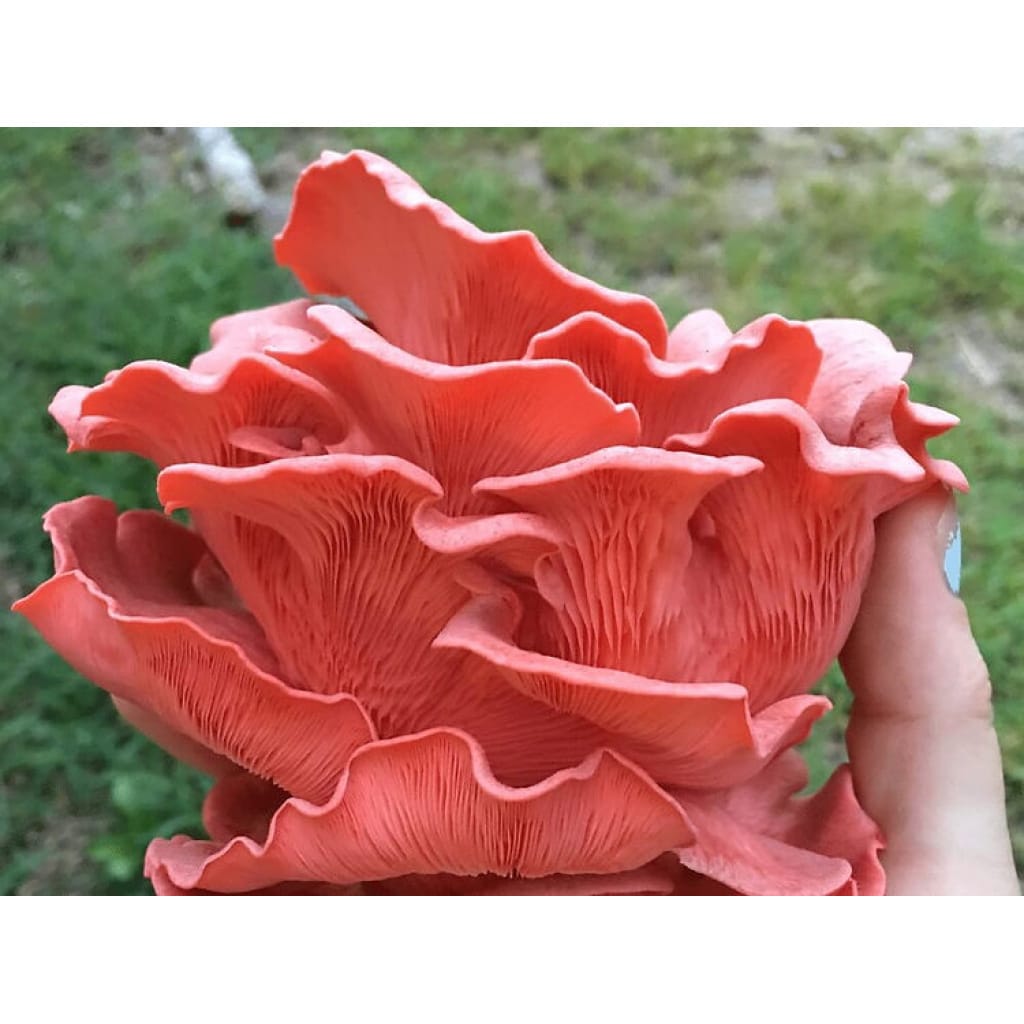
Pink Oyster
Pleurotus Djamor
Also known as Salmon Oyster, Flamingo Oyster, and Strawberry Oyster
Information-They throw in lot of baby mushrooms, it is recommended to cust a very small incision for pink oyster so that the pins are very less and mushrooms can concentrate in growing bigger and larger for the first few pinset. Provide good lighting for
Difficulty level: Fruiting Temperature: 18°- 30°C
Fruiting Style: Side Fruiting
Colonisation time
Fruiting time-
The culture of this specie cannot be kept in fridge

Tan Oyster
Pleurotus Ostreatus
Also known as Brown Oyster
Information-
Difficulty level: Fruiting Temperature: 15°- 24°C
Fruiting Style: Side Fruiting
Colonisation time
Fruiting time-

Phoenix Oyster
Pleurotus Pulmonarius
Also known as Indian, Italian or Lung Oyster
Information-
Difficulty level: Fruiting Temperature: 14°- 24°C
Fruiting Style: Side Fruiting
Colonisation time
Fruiting time-
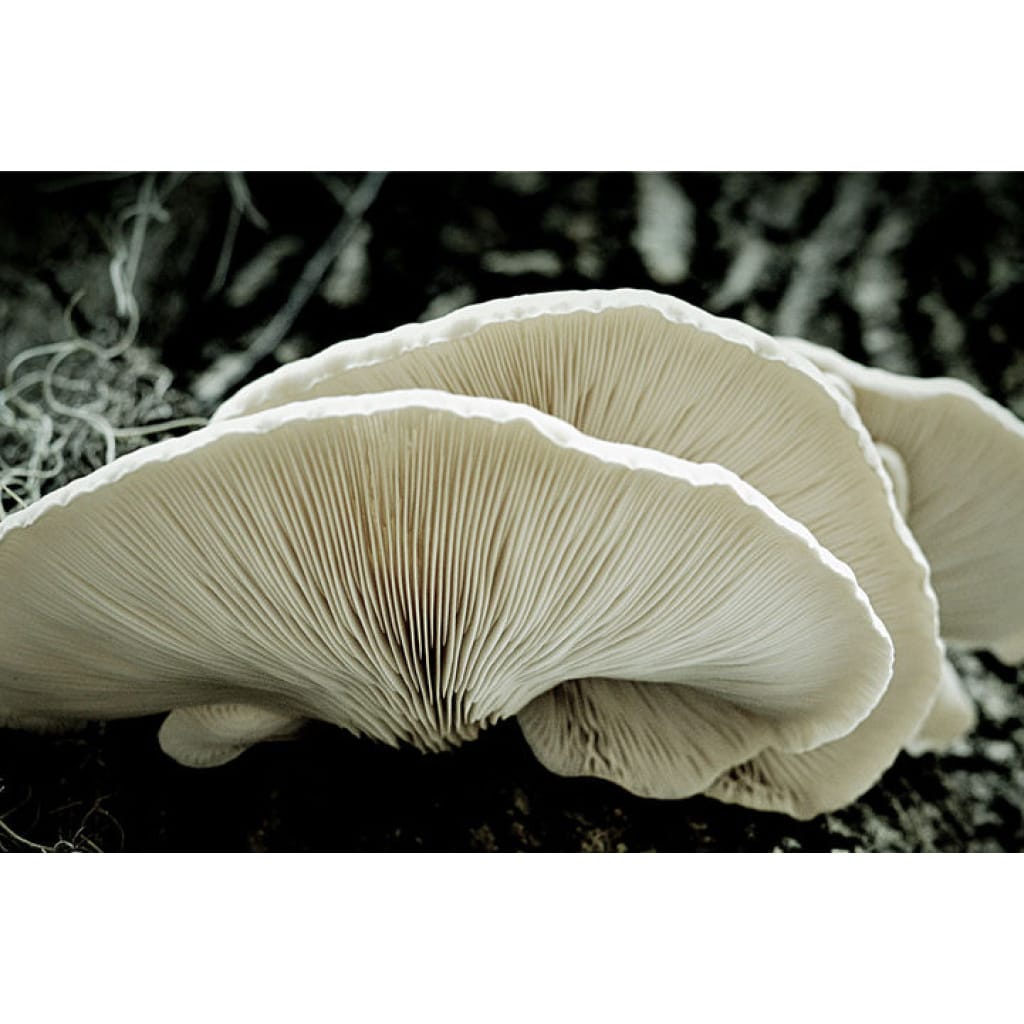
Winter White Oyster
Pleurotus Ostreatus
Information-
Difficulty level: Fruiting Temperature: 12°- 22°C
Fruiting Style: Side Fruiting
Colonisation time
Fruiting time-
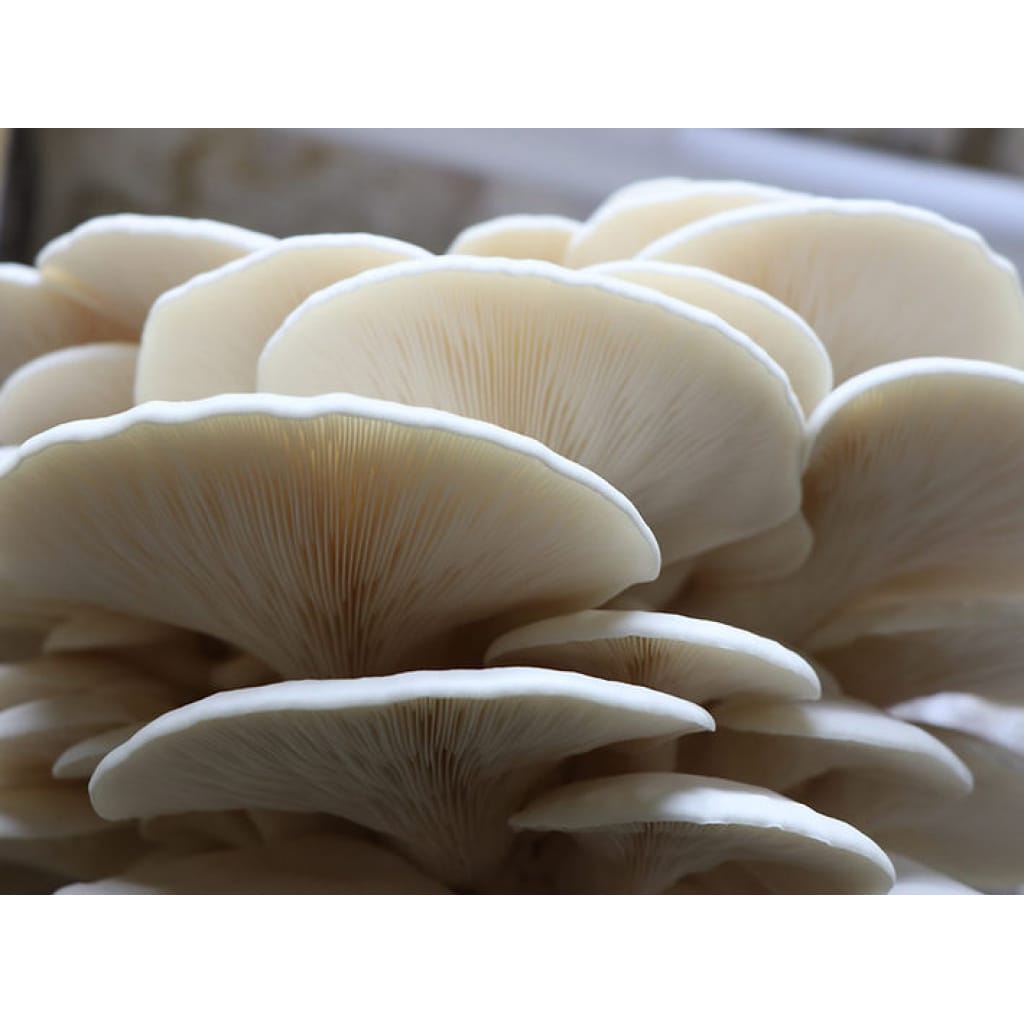
Warm White Oyster
Pleurotus Ostreatus
Also known as Cinnamon Caps
Difficulty level: Fruiting Temperature: 10°- 30°C
Fruiting Style: Side Fruiting
Colonisation time
Fruiting time-
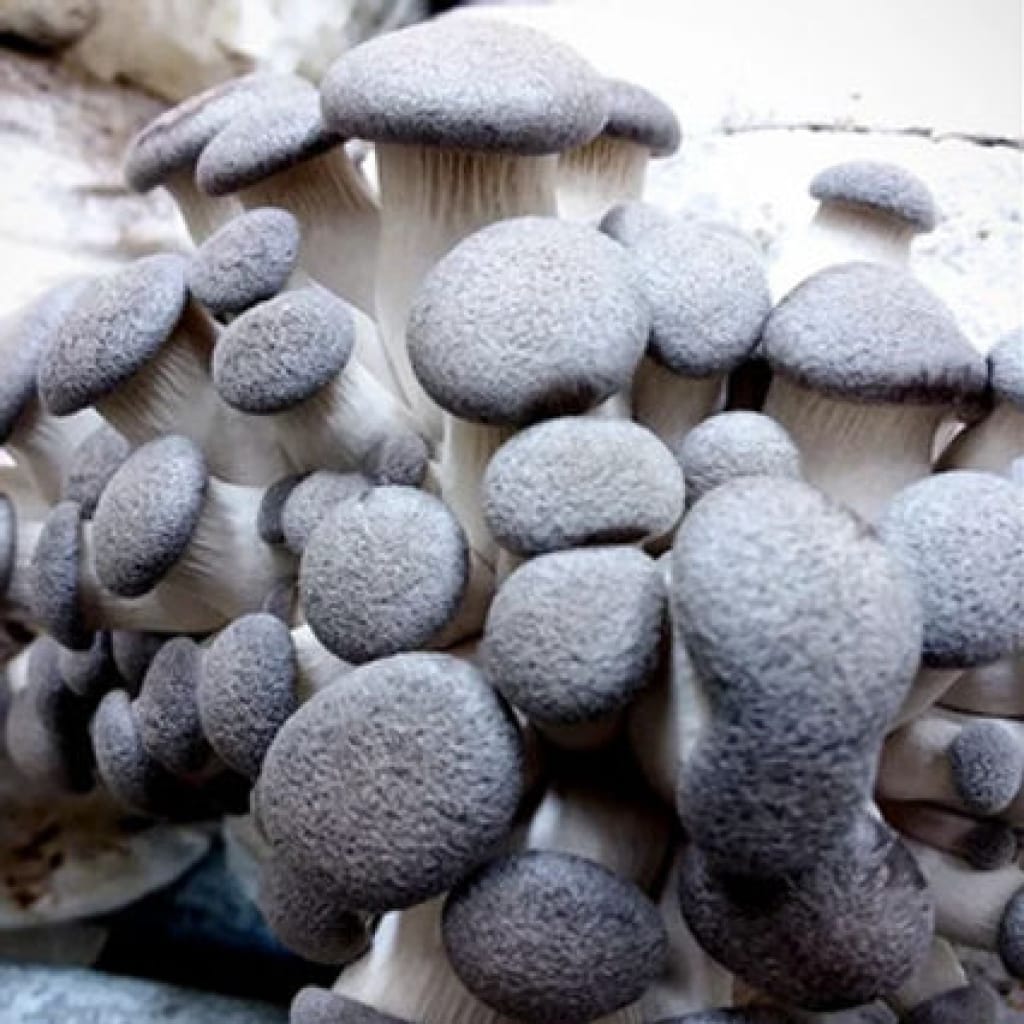
Black King Oyster
Pleurotus Ostreatus – Hybrid
Also known as Black Pearl King Oyster
Information-
Difficulty level: Fruiting Temperature: 15°- 21°C
Fruiting Style: Top Fruiting
Colonisation time
Fruiting time-
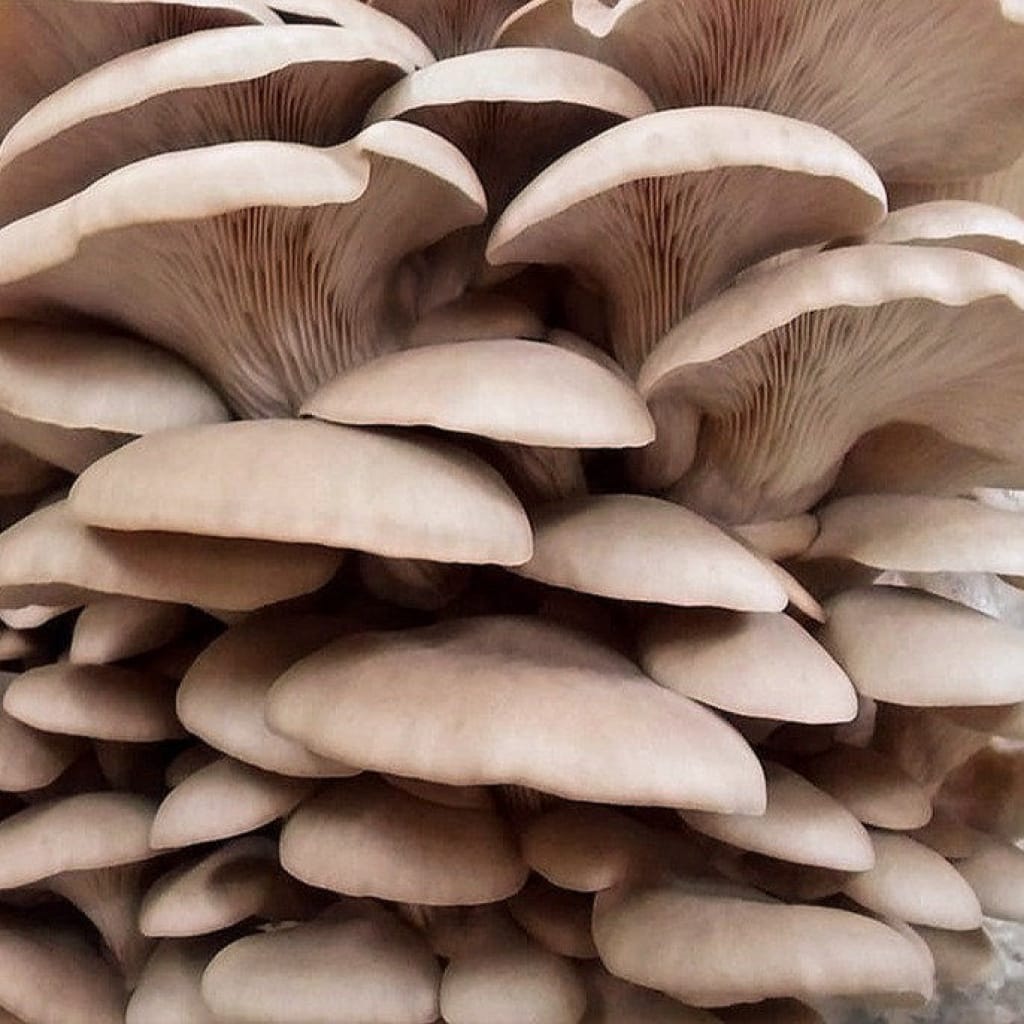
King of Pearl Oyster
Pleurotus Ostreatus
Information-
Difficulty level: Fruiting Temperature: 10°- 30°C
Fruiting Style: Side Fruiting
Colonisation time
Fruiting time-
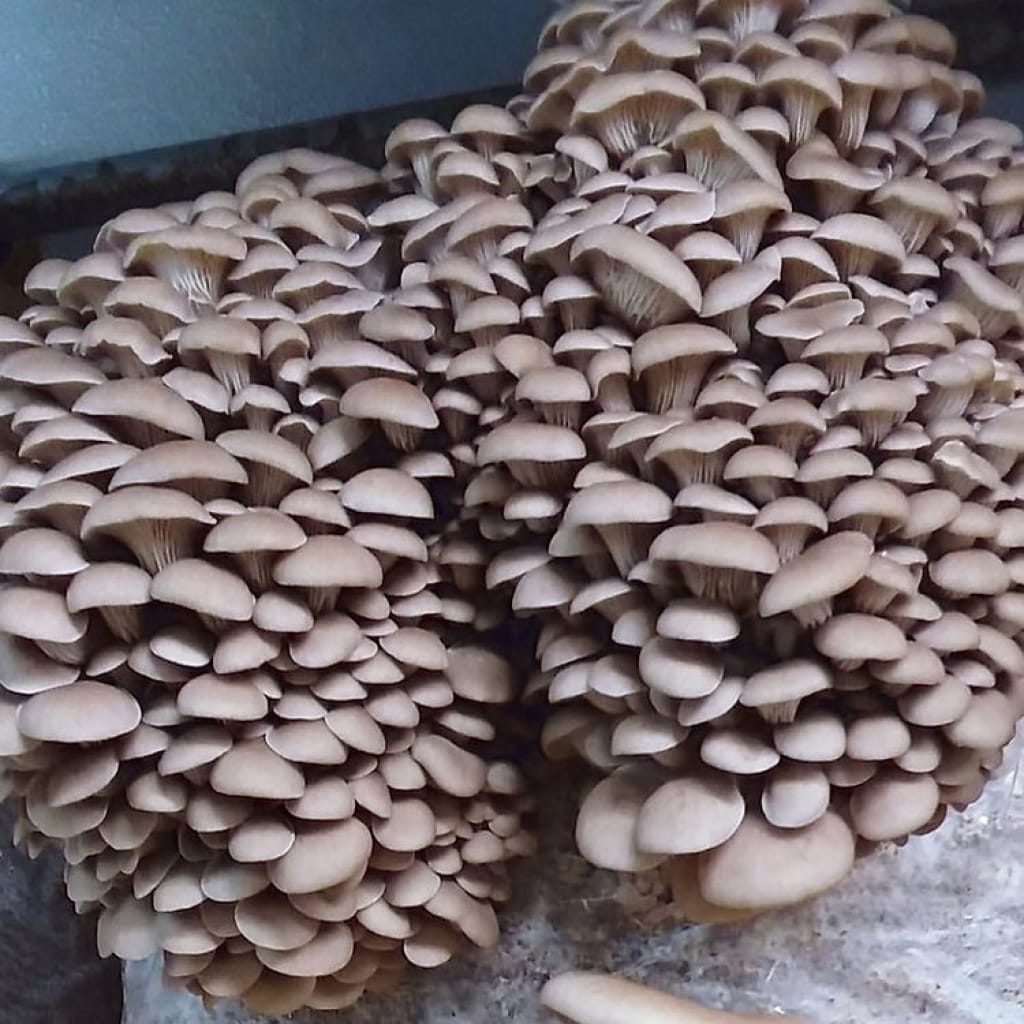
Princess of Pearl Oyster
Pleurotus Ostreatus
Information-Another oyster that fruits abundantly, will give you more fruits than any other oysters.The fruiting body are smaller.
This is just another genetics for the
Difficulty level: Fruiting Temperature: 12°- 29°C
Fruiting Style: Side Fruiting
Colonisation time
Fruiting time-

Elm Oyster (White)
Pleurotus Ulmarius
Information-Another oyster that fruits abundantly, will give you more fruits than any other oysters.The fruiting body are smaller.
This is just another genetics for the
Difficulty level: Fruiting Temperature: 12°- 29°C
Fruiting Style: Side Fruiting
Colonisation time
Fruiting time-

Reishi
Ganoderma Steyaertanum
Information-Al Ganoderma species are medicinal.Not pallatable wooddy tea. VEry agressive and thick plastic like mycelium used for packaging.Can also float because of air gaps.
Difficulty level: Fruiting Temperature: 23°- 25°C
Fruiting Style: Side Fruiting
Colonisation time
Fruiting time-

Turkey Tail
Trametes Versicolor Polyporales
Information-
Difficulty level: Fruiting Temperature: 13°- 16°C
Fruiting Style: Side Fruiting
Colonisation time
Fruiting time-

Coral Tooth
Hericium Coralloides
Information-
Difficulty level: Fruiting Temperature: 12°- 20°C
Fruiting Style: Side Fruiting
Colonisation time
Fruiting time-

Golden Wine Cap
Trametes Versicolor Polyporales
Information-
Difficulty level: Fruiting Temperature: 13°- 16°C
Fruiting Style: Side Fruiting
Colonisation time
Fruiting time-

Lion's Mane(NATIVE)
Native Australian Hericium Coralloides
Also known as Monkey Head and Bearded Tooth Fungus
Lions mane are very fast coloniser but its mycelium is very thin and whipsy. It is very hard to see the mycelium unless it is few week old. Most beginner growing lions mane will make a mistake to fruit there bag very late as they think the mycelium has not colonised their bag yet.As a rule of thumb, we put the bag to fruit after 3 weeks into colonisation.Lions mane will fruit from anywhere it can find air, so we recommend to completely take all air out of your fruiting block and then cut a X in the bag so they will only fruit from where they are intented to.
Difficulty level: Easy
Fruiting Temperature: 12°- 22°C, 16 degrees is a sweet spot
Fruiting Style: Side Fruiting but can also be fruited from the top
Colonisation time-2 to 3 weeks if kept at 24 C
Fruiting time-

Lion's Mane Beard
Hericium
Also known as Monkey Head and Bearded Tooth Fungus
Lions mane are very fast coloniser but its mycelium is very thin and whipsy. It is very hard to see the mycelium unless it is few week old. Most beginner growing lions mane will make a mistake to fruit there bag very late as they think the mycelium has not colonised their bag yet.As a rule of thumb, we put the bag to fruit after 3 weeks into colonisation.Lions mane will fruit from anywhere it can find air, so we recommend to completely take all air out of your fruiting block and then cut a X in the bag so they will only fruit from where they are intented to.
Difficulty level: Easy
Fruiting Temperature: 12°- 22°C, 16 degrees is a sweet spot
Fruiting Style: Side Fruiting but can also be fruited from the top
Colonisation time-2 to 3 weeks if kept at 24 C
Fruiting time-
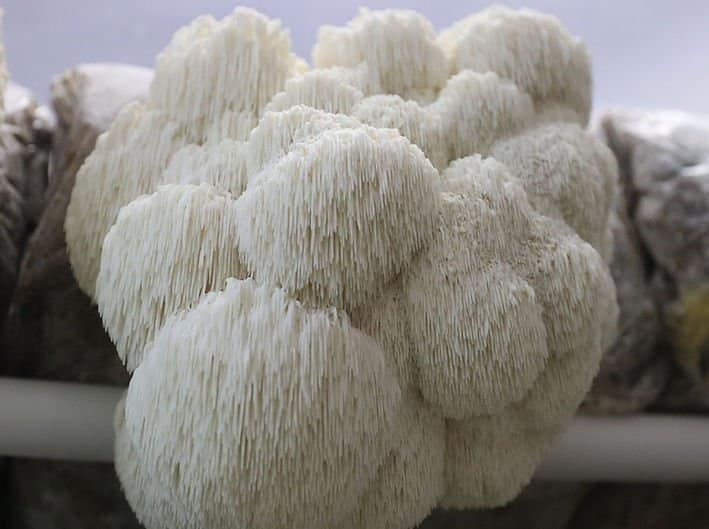
Lion's Mane Pride
Hericium
Also known as Monkey Head and Bearded Tooth Fungus
Lions mane are very fast coloniser but its mycelium is very thin and whipsy. It is very hard to see the mycelium unless it is few week old. Most beginner growing lions mane will make a mistake to fruit there bag very late as they think the mycelium has not colonised their bag yet.As a rule of thumb, we put the bag to fruit after 3 weeks into colonisation.Lions mane will fruit from anywhere it can find air, so we recommend to completely take all air out of your fruiting block and then cut a X in the bag so they will only fruit from where they are intented to.
Difficulty level: Easy
Fruiting Temperature: 12°- 22°C, 16 degrees is a sweet spot
Fruiting Style: Side Fruiting but can also be fruited from the top
Colonisation time-2 to 3 weeks if kept at 24 C
Fruiting time-

Lion's Mane Heat Tolerant Wild Strain
Hericium
Also known as Monkey Head and Bearded Tooth Fungus
Lions mane are very fast coloniser but its mycelium is very thin and whipsy. It is very hard to see the mycelium unless it is few week old. Most beginner growing lions mane will make a mistake to fruit there bag very late as they think the mycelium has not colonised their bag yet.As a rule of thumb, we put the bag to fruit after 3 weeks into colonisation.Lions mane will fruit from anywhere it can find air, so we recommend to completely take all air out of your fruiting block and then cut a X in the bag so they will only fruit from where they are intented to.
Difficulty level: Easy
Fruiting Temperature: 12°- 22°C, 16 degrees is a sweet spot
Fruiting Style: Side Fruiting but can also be fruited from the top
Colonisation time-2 to 3 weeks if kept at 24 C
Fruiting time-
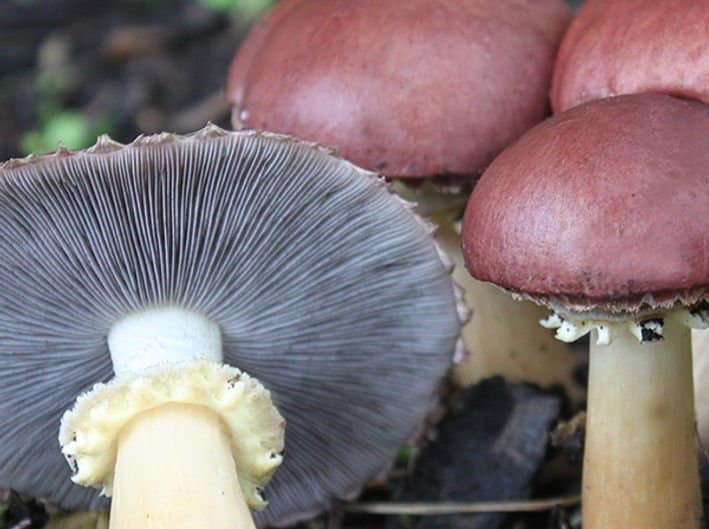
Wine Cap
Stropharia Rugosoannulata
Also known as Garden Giant and King Stropharia
Mushrooms that taste like potatoes.Best to be harvested when they are small, as they are packed with flavour.They can become really big if grown outdoors as that is how they get there name as garden giant.When they become big, they loose their flavour.
Difficulty level: Hard
Fruiting Temperature: 12°- 25°C
Fruiting Style: Top Fruiting
Colonisation time
Fruiting time-
Preferred Substrate- Grow them in a bed of compost or manure only.You can also mix the two to create a perfect substrate. Will grow outdoors only and not in a tub or bag. Pins will only come when there is microbial activity on the mycelium which triggers it to fruit.

Swordbelt
Agrocybe Aegerita
Also known as Piopinno or Black Poplar Mushroom
Zhuzhuang Tiantougu(Chinese), Yanagi-matsutake(Japanese)
Grain spawn smell: Not pleasant
Type of grain recommended-any
Gourmet
Spore shape and colour: Ovoid to slightly ellipsoid, brown.
Identification-Grows in a cluster on hardwood,.
Ecology: Saprotrophic, Primary decomposer
Difficulty level: Easy
Fruiting Temperature: 15°- 21°C
Fruiting Style: Top Fruiting
Preferred substrate: Sawdust 80% and 20% Bran or Masters mix.
The mycelium of this species will turn from spotted brown to dark brown tan on agar.
The casing-casing layer is not essential; sterilised or pasteurised casing will help.
Harvest-Just before the veal breaks, the mushroom is very fragile.Logo
cold
Gourmet
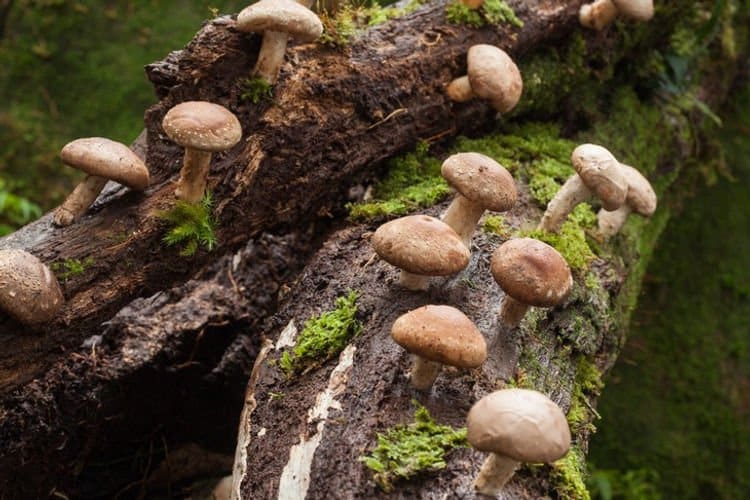
Shiitake - 3782
Lentinula Edodes
Also known as Black Forest Mushroom
Information-
Difficulty level:
Fruiting Temperature: 7°- 21°C
Fruiting Style: Top and Side Fruiting
Colonisation time
Fruiting time-

Australian Shiitake
Lentinula Lateritia
Information-
Difficulty level: Fruiting Temperature: 13°- 19°C
Fruiting Style: Top and Side Fruiting
Colonisation time
Fruiting time-
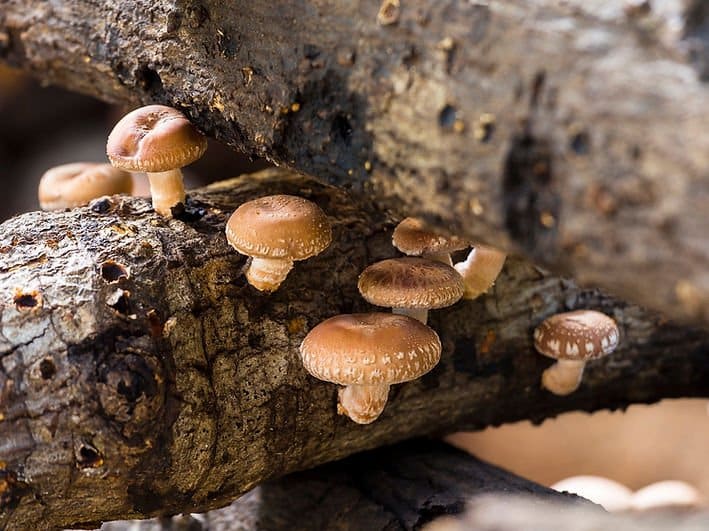
Shiitake 5000
Trametes Versicolor Polyporales
Information-
Difficulty level: Fruiting Temperature: 13°- 16°C
Fruiting Style: Side Fruiting
Colonisation time
Fruiting time-
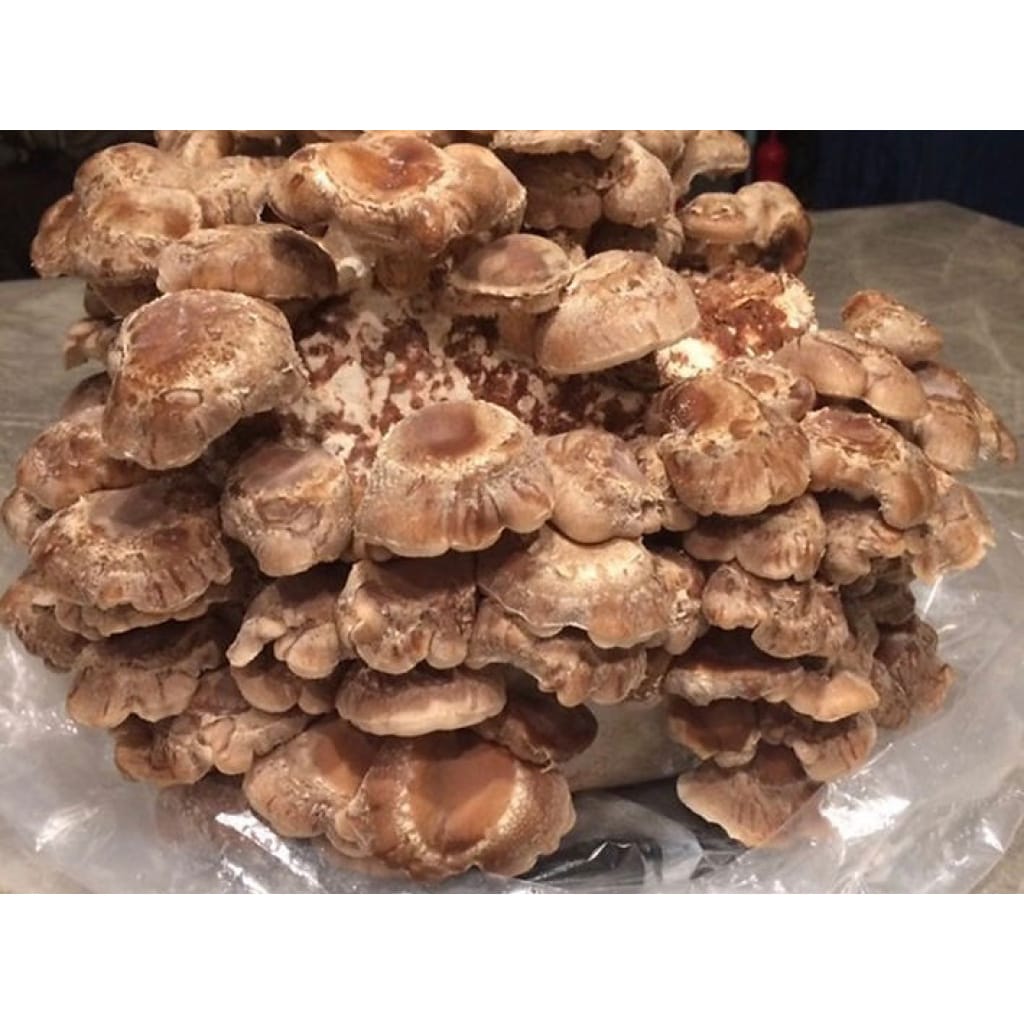
Straw Shiitake
Native Australian Hericium Coralloides
Also known as Monkey Head and Bearded Tooth Fungus
Information-
Difficulty level: Fruiting Temperature: 12°- 22°C
Fruiting Style: Side Fruiting
Colonisation time
Fruiting time-
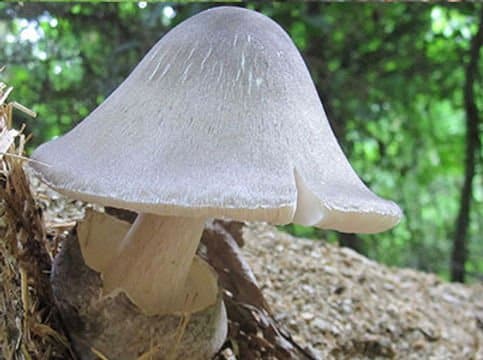
PAddy Straw
Native Australian Hericium Coralloides
Also known as Monkey Head and Bearded Tooth Fungus
Information-
Difficulty level: Fruiting Temperature: 12°- 22°C
Fruiting Style: Side Fruiting
Colonisation time
Fruiting time-
The culture of this specie cannot be kept in fridge

Golden Enoki
Flammulina Velutipes
Also known as Golden Needle and Enokitake
Information-
Difficulty level:
Fruiting Temperature: 17° – 21°
Fruiting Style: Top Fruiting
Colonisation time
Fruiting time-
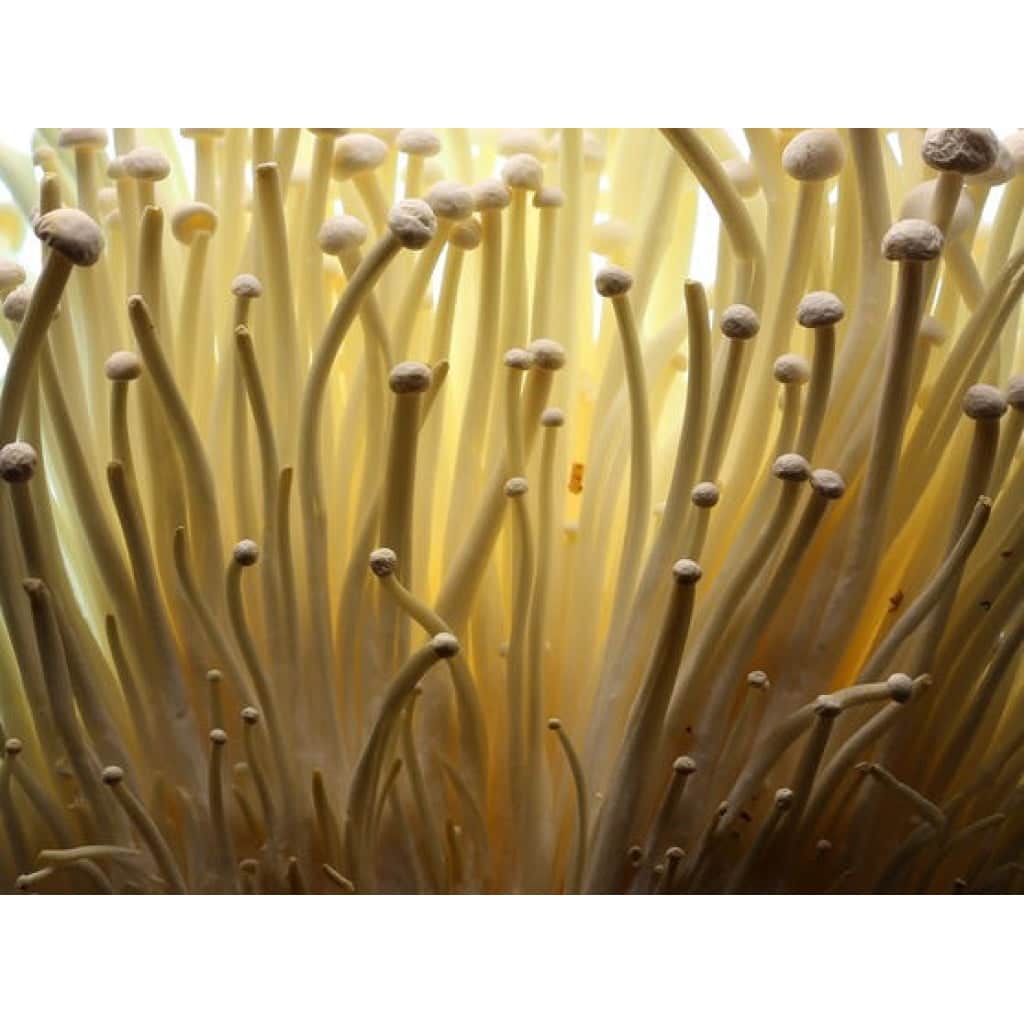
Enoki
Flammulina Velutipes
Also known as Velvet Shank, Enokitake, Furry foo
Information:In wild they grow more like oysters.The look of enoki you see is achieved by ellevating co2 levels which decrease cap size and also the white is achieved b growing them in darkness, this makes them easily harvestable.
Fun Fact-You can grow this mushroom in your fridge.
Grain spawn smell: Light but not very pleasant.
Type of grain recommended-any, millet
Gourmet
Spore shape and colour:Ellipsoid, white
Ecology-Saprotrophic, Primary decomposer
Agar-Growswhite and then turn golden, yellow brownish as it ages.
Difficulty level: Easy
Fruiting Temperature: 8°- 12°C
Fruiting Style: Top Fruiting
Preferred substrate-
The culture of this specie cannot be kept in fridge
Identification:
Casing
Harvest
Pinning trigger-Requires cold shock to induce pinning at 4C

Portobello
Agaricus bisporus
Synonym: Agaricus brunnescens
Also known as White Cap, White Button, Champignon, cremini
Fun Fact-* The same mushroom goes by different names depending on its growth stage: White Button when young, Cremini at halfway maturity, and Portobello when fully matured. Younger mushrooms tend to have more flavour.
Agaricus Bitorquis is very similar to bisporus but prefers much warmer temperatures.
Grain spawn smell: Musty and not pleasant
The of grain recommended-Rye or Millet.
Medical or gourmet?Gourmet
Spore shape and colour:
Identification
Ecology-Saprotrophic, Secondary decomposer
Difficulty level: Advance
Fruiting Temperature: 15°- 21°C
Fruiting Style: Top Fruiting
Preferred substrate-Phase 2 manure, mix of Horse(or cow)and chicken manure and straw .Presence of ammonia will stop the mycelium growing.Make sure ammonia cannot be smelled after the phase 2 composting is done with proper aeration and evaporation.
Casing-do not heat treat the casing layer.apply 2cm thick layer.
Harvest-When the veil is broken and cap is broadly convex but before they are flat.
Cooking-Portobello are known to contain a carcegonic compoiuund that is killed after prolonged heating, makes sure to heatthe mushroom well.
Logo- winter,giurmet, Secondory decomposer
check if permitted in WA
Add the table

Almond Mushroom
Agaricus Blazei
Also known as Almond Portobello, King Agaricus, Cogmelo de deus(Mushroom of god), Royal Sun Agaricus, Kawariharatake, Himematsutake
Information-When matured this mushroom has a tinge of almond frangnance hence teh name, thes emushrooms are phototroic.
Spore shape and colour: Nearly Ovoid, chocolate brown
Identification: Mushroom bruises bright yellow when cut and eventually will turn brown.
Ecology-Saprotrophic, Secondary decomposer
Medicinal Mushroom, anti cancer and tumour benefits,
Difficulty level: Advance
Fruiting Temperature: 20°- 30°C
Fruiting Style: Top Fruiting
preferred substrate-Phase 2 manure, mix of cow and chicken manure and straw Presence of ammonia will stop the mycelium growing.Requires substrate similar to portobello, will also grow on sawdust 80%enriched with bran 20%, since they are secondor decomposers, use the used blocks of primary wood loving mushroom blocks as substrate(After compostiing with more straw).
Casing-Use casing 7 pHs, not sterilised or pasturised, requires presence of heat-sensitive bacteria to fruit.
People put a bit of soil diluted with water and filter and sprayed over the casing one week after application toinduce fruiting. When a specific strain of bacteria is not present Almond Agaricus will not fruit.Requires casing atleast 2 cm thick.
Harvest-Harvest when veil is still present, stem is cotton and soil will stick to the mushroom, care needs to be taken to avoid this whileharvesting.HAve good shelf life if out in fridge at 2°C after harvest.
The culture of this specie cannot be kept in fridge
Logo- Summer, medicinal , fridge, Secondory decomposer
check if permitted in WA
Add the table
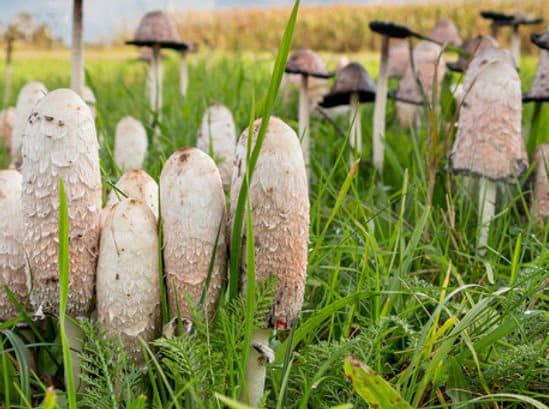
Shaggy Mane
Coprinus Comatus
Also known as Shaggy Ink Cap, Lawyer’s wig, maotou-Guisan(Chinese)
Gourmet
Fun factThe mushroom cant be sold commercially because they self-distruct 2-3 days after harvest or upon maturity to a gluey mess. The mushroom has excellent flavour and is highly priced amongst hikers.
Information-Requires substrate that is very rich in Nitrogen, Best if fruited outdoors. Grows naturally in lawn
Grain spawn smell: Light and pleasant
Type of grain recommended to use sawdust spawn on outdoor patches, but can use Rye Millet, Sorghum, Wheat etc.
Spore shape and colour: Ellipsoid with germ pore at one end, black.
Identification- Easily identified b foragers as the do not have poisonous lookalikes,
Ecology-Saprotrophic, Secondary decomposer
Difficulty level: Advanced, extremely challenging to get even pin-set, especially indoors.
Fruiting Temperature: 15°- 30°C
Fruiting Style: Top Fruiting
Preferred substrate: Cow and horse manure mixed with straw grown in outdoor patches.
Colonisation time
Fruiting time-
Identification:
Casing-Pasturised Peat moss casing, When the mycelium starts to come from underneath the casing, scrap teh casing surface to increase yelids.
Pinset forms in circular dials.
Harvest-Before the gills turn start to turn black.
Pinning trigger-Light helps to trigger pinning
Logo
Summer
Gourmet

Australian Morels
Morchella Australiana
Information-Most vigorous mycelium we have seen, Starts white and will then turn brown as it matures.The mycelium is very fluffy. Grow outdoors in shade.Loves Loamy and alkaline soil.Prepare the area with composted woodchips and wood ash.Thes mushroom normally fruit after a forest fire in wild.These are one of the most priced mushrooms after truffles.
Difficulty level: Very hard
Fruiting Temperature: 5°- 16°C
Fruiting Style: Top Fruiting
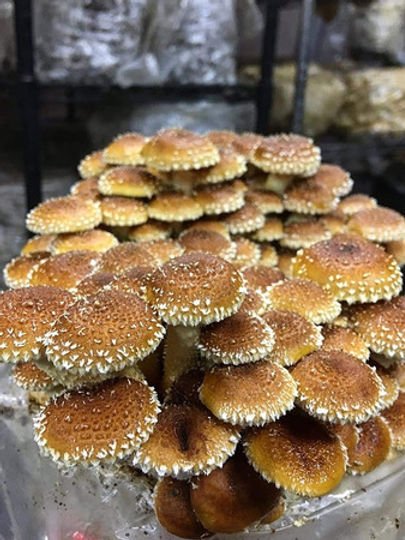
Chestnut
Pholiota Adiposa
Also known as Cinnamon Cap and Brick Top
Information-
Difficulty level: Fruiting Temperature: 12°- 21°C
Fruiting Style: Top Fruiting
Colonisation time
Fruiting time-

Nameko
Pholiota Microspora
Also known as Butterscotch Mushroom
Information-
Difficulty level: Fruiting Temperature: 10°- 20°C
Fruiting Style: Top Fruiting
Colonisation time
Fruiting time-
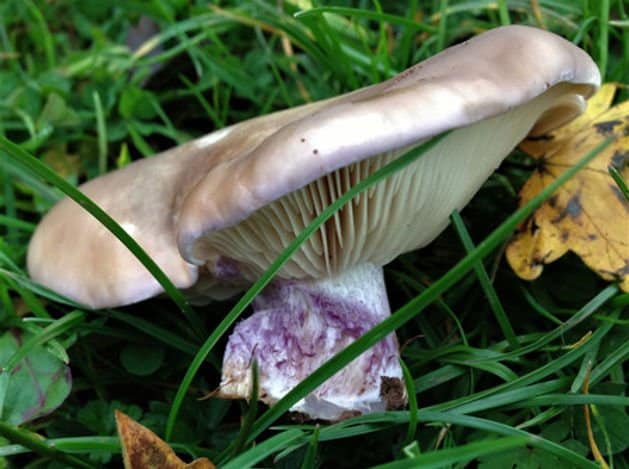
Field Blewit
Lapesta Saeva
Also known as Blue-Leg
Information-Culture for this mushroom was provided to us by ‘Forest fungi’.Outdoor mushroom that have purple fruiting body.
Mycelium starts white but will turn purple as it matures.
Difficulty level: Fruiting Temperature: 7°- 21°C
Fruiting Style: Top Fruiting
Colonisation time
Fruiting time-
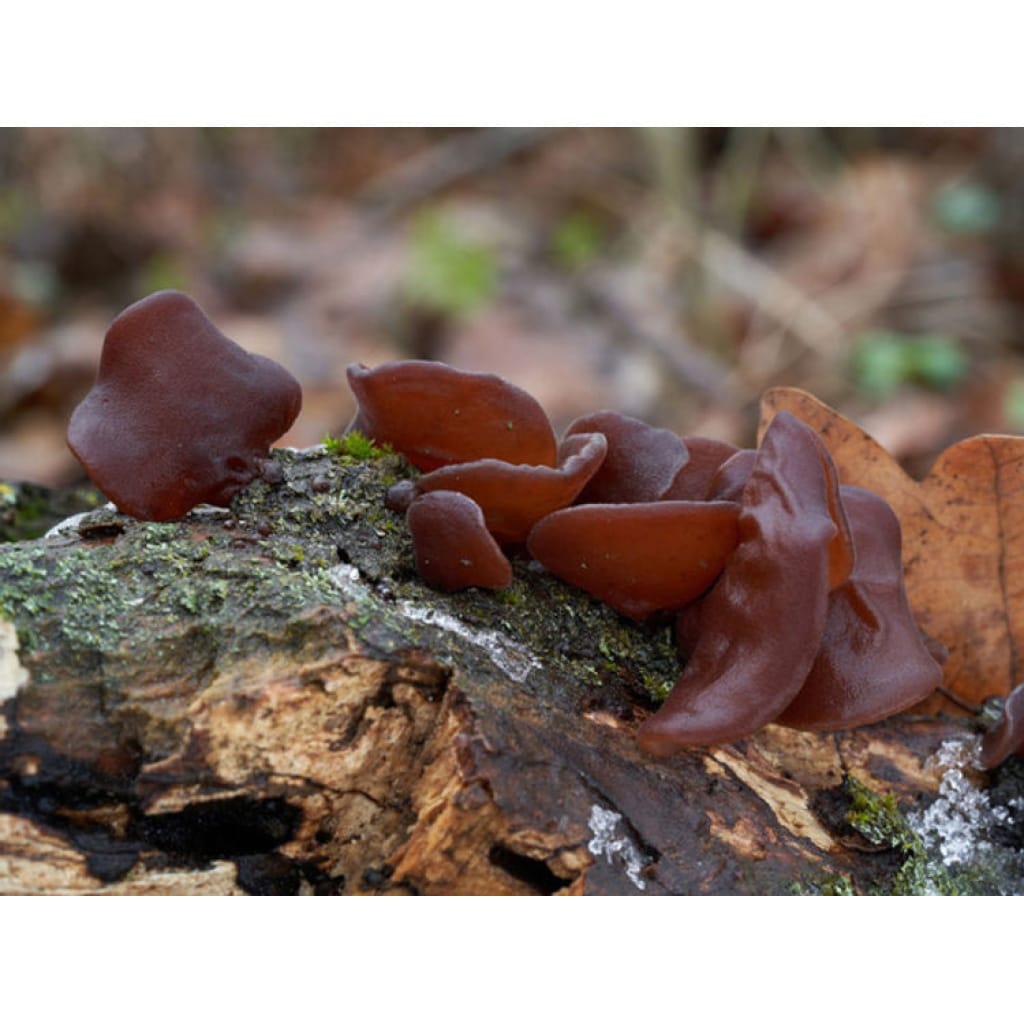
Wood Ear
Auricularia Auricula-Judae
Also known as Black Wood Ear
Information-
Difficulty level: Fruiting Temperature: 10°- 21°C
Fruiting Style: Side Fruiting
Colonisation time
Fruiting time-
The culture of this specie cannot be kept in fridge
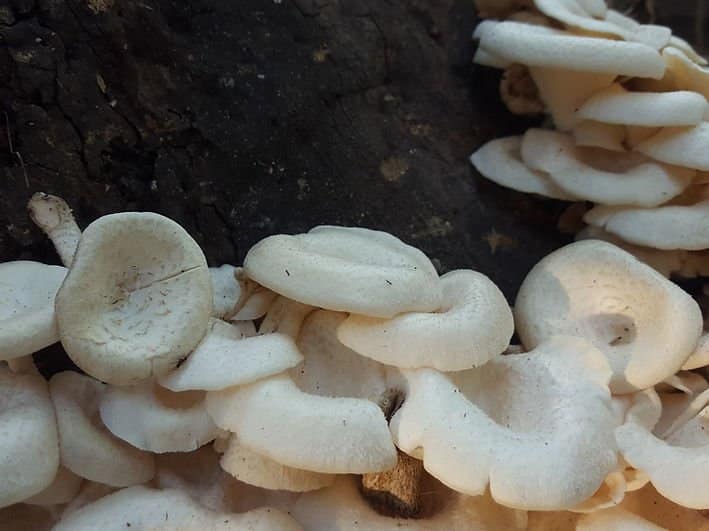
White Elf
Pleurotus nebrodensis
Information-
Difficulty level: Fruiting Temperature: 10°- 21°C
Fruiting Style: Side Fruiting
Colonisation time
Fruiting time-

Maitake
Pleurotus nebrodensis
Information-
Difficulty level: Fruiting Temperature: 10°- 21°C
Fruiting Style: Side Fruiting
Colonisation time
Fruiting time-

Brown Shimeji
Pleurotus nebrodensis
Common Name-Beech Mushroom, Buna-Shimeji,
Scientific name-Italics
Synonym
Also known as
Information: Fun Fact-
Grain spawn smell: The of grain recommended”
Medical or gourmet?
Spore shape and colour: Identification
Aagar-
Ecology-Saprotrophic, Primarydecomposer
Difficulty level: Fruiting Temperature: 15°- 21°C
Fruiting Style: Top Fruiting
Preferred substrate % Sawdust and 20% bran, or use Pasturised straw with 25% sawdust spawn.
The culture of this specie cannot be kept in fridge
Identification: Casing
Harvest
Pinning trigger-
Pinset formation-

Ivory Shimeji
Pleurotus nebrodensis
Common Name
Scientific name-Italics
Synonym
Also known as
Information:
Fun Fact-
Grain spawn smell:
The of grain recommended”
Medical or gourmet?
Spore shape and colour:
Identification
Aagar-
Ecology
Difficulty level: Fruiting Temperature: 15°- 21°C
Fruiting Style: Top Fruiting
Preferred substrate-
The culture of this specie cannot be kept in fridge
Identification:
Casing
Harvest
Pinning trigger-
Pinset formation-
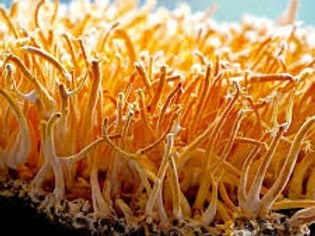
cordyceps
Cordyceps militaris
Information-
Difficulty level: Advance
Fruiting Temperature: 10°- 21°C (lower the better)
Fruiting Style: Top Fruiting
Fruiting time- 45-60 days after inoculation.
Please store Liquid culture and agar plates away from light; it is best to be wrapped in foil paper as they are extremely sensitive to light.
This mushroom is not grown traditionally by inoculating grain bags and mixing with substrate.
Since the culture is very prolific, the inoculation and colonisation are carried out at the same time.
Round Chinese soup takeaway containers or trays with a maximum of 1.5-2 cm nutritious substrate(sterile) is used, and then liquid culture is poured over the substrate and left to grow in the dark for 3 days. Then, it is introduced to light for fruiting.
The slower they grow, the more medicinal compounds they have.The use of different recipes to grow can also affect the mudcinal compunds in these mushrooms.
Medical compounds know to us:= Cordycepin, Cordycepene, Adenosine,Cordymin,Cordyxanthins, Cordlan