
Description
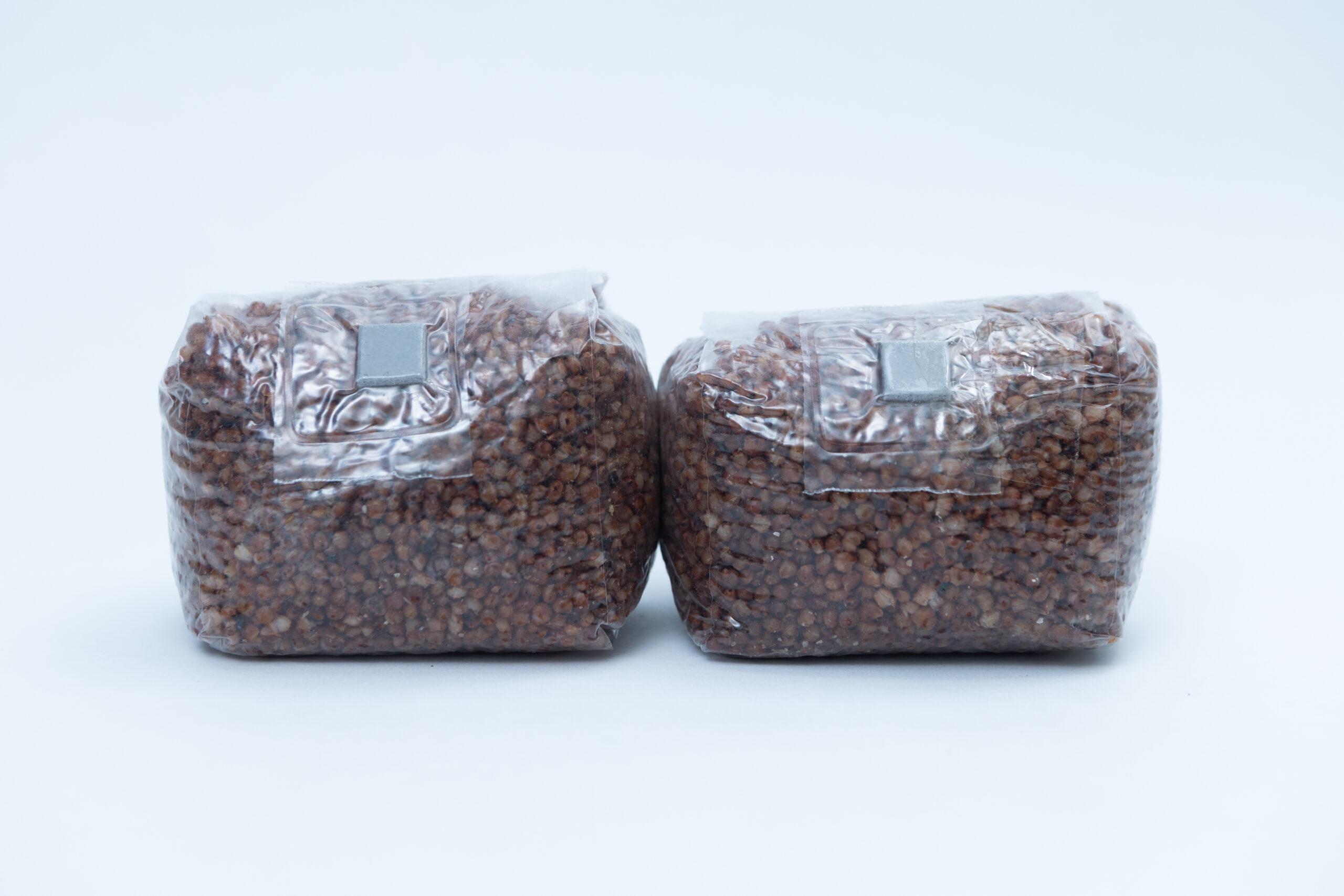
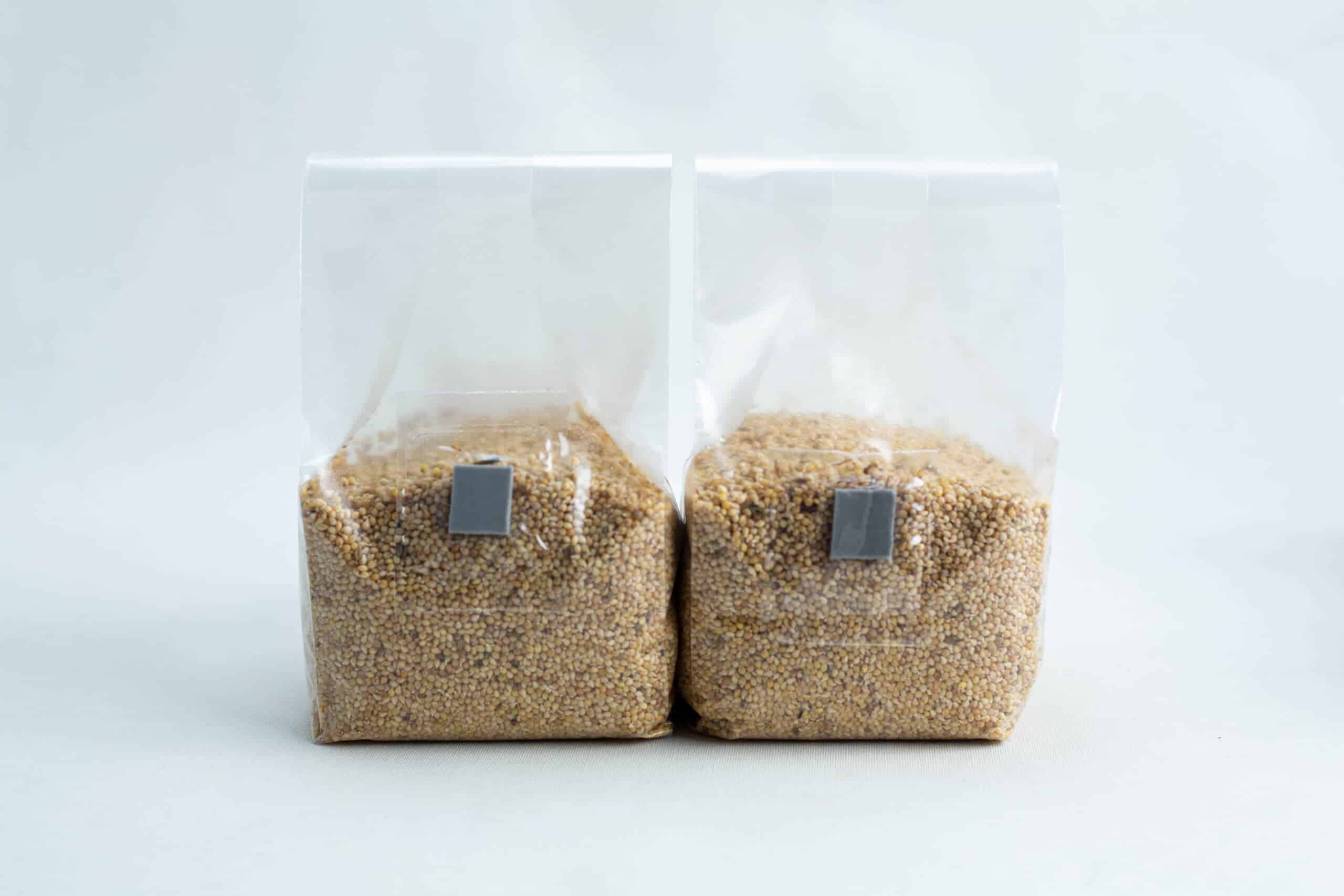
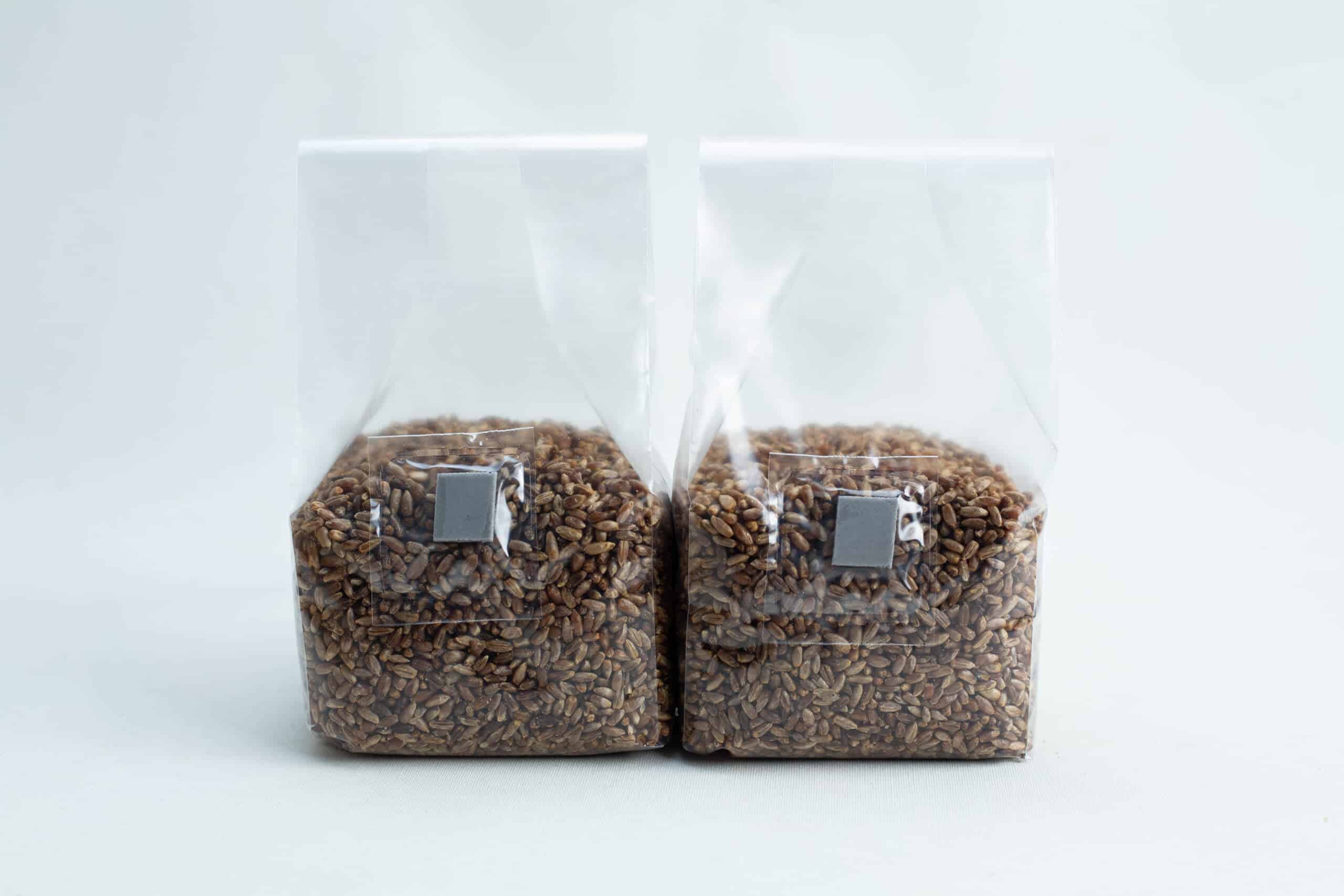
Pre sterilised 500g grain spawn bag for mushroom cultivation, ready to inoculate with spores or liquid culture. Choose from three of the most popular and reliable grains used in mycology. There is no single best grain. Each has its own strengths, and the right choice often comes down to the species and even the individual strain you are working with, so the honest answer is to try a few and find what performs best for you. All bags come with an alcohol swab and instructions.
Despite great care during processing, it is possible for some fibres or plastic from the bags to end up on the grains. The grains are also processed alongside other grains and may contain pumpkin seeds or other seeds. Everything is sterilised, so it will not affect your growth.
Rehydrating Your Bag
If your bag needs a little extra moisture, our sterile water syringes can help. They’re useful for:
- Bags that have been sitting for too long before inoculation
- Agar wedge inoculations that are struggling to fully colonise due to lack of moisture
- Bags accidentally left on a heat mat for too long
- Topping up when you only have a small amount of spore or liquid culture left
WHAT SETS EACH GRAIN APART
Rye. The classic all rounder that most cultivation guides are written around. Our rye is nutritious and organic, with the largest kernel of the three. That larger kernel holds moisture well and gives a strong, vigorous, forgiving spawn. Fewer but larger grains per bag mean fewer but larger inoculation points, each carrying good nutrient reserves. A dependable benchmark if you are new or want a proven starting point.
Sorghum (Milo). The middle ground. Sorghum is sold in the feed trade as milo, and it is the same grain. Its kernel is smaller than rye but larger than millet, so it naturally sits between the two on both kernel size and the number of inoculation points. That gives you more starting points than rye for a quicker jump, while the grains are still big enough to handle and break up easily. It stays firm and separate when prepared correctly, which makes it a favourite for growers who want faster colonisation and always choose the middle ground as best of both world.
Millet. The smallest kernel of the three, and that is exactly why many experienced growers rate it as the gold standard for spawn. As a rough illustration, a given weight of millet holds far more individual grains than the same weight of rye, which means many more inoculation points. Inoculation points are the locations where the mycelium takes hold and begins to colonise, so more points can mean faster, more even colonisation and excellent break up when shaken. Millet is light, hydrates quickly and is economical to run at volume, ideal for spawn to spawn expansion.
A NOTE ON NUTRITION AND CHOOSING
All three grains provide the carbohydrates, protein and trace nutrients mycelium needs to run strongly. Rye and sorghum carry a little more bulk nutrition per kernel, while millet trades kernel size for sheer number of colonisation points. The real differentiator is kernel size. Smaller grains give more inoculation points and faster spread, larger grains give more reserve per point and a more forgiving spawn. Different species and even different strains respond differently to each, so rather than ask which is best, we encourage you to try all three across your grows and settle on the grain that consistently works for your species and conditions.
If you have inoculated a grain bag with agar and had to cut it open with no way to reseal it, consider our Small Sealing Bag Clips: Do not risk contamination, that is why we have these clips for you.
We offer High Quality Disposable Gloves and Masks essential for maintaining sterile conditions in your mycology projects. We also recommend Biodegradable MEA agar cups for those testing liquid cultures or spore syringes before inoculating their bags. Do you need a sterile workspace? Have a look at our Still Air Box (SAB).
Before you order
Test your spore syringe or liquid culture before your bag arrives. This is the single best way to avoid a wasted bag. If your culture turns out to be contaminated and you only find out after the bag has landed, you are left with a clean bag and nothing safe to put in it, and the 14 day window will not wait.
Always plate on MEA medium not MEAG. MEAG is anti bacterial so it wont grow bacteria, so you wont know if your culture is contaminated with bacteria.
Read the plate at day 7 to 10. Healthy mycelium is usually visible by day 3 to 5, but bacteria and slower moulds often do not show until the end of that window. Seeing growth at day 4 is not a green light. Give it the full time before deciding.
When the bag arrives
Rootlab ships the bag taped inside a box. Remove the tape carefully, unfold the bag and stand it upright.
Check it straight away. You are looking for green or otherwise coloured patches, wet spots, or an off smell. If anything looks or smells wrong, contact us before going any further.
Hold the bag for at least 5 days and check it again. Contamination is not always visible on arrival, and this holding period gives anything latent a chance to show itself. It also protects you, because once a bag is inoculated it can be hard to tell whether a problem originated with us, with your syringe, or with your technique and environment.
Use the bag within 14 days of arrival. Past that, the bag starts to dry out and the contamination risk rises.
Inoculating
If your culture has already tested clean and the bag passes its day 5 check, inoculate any time between day 5 and day 13.
If you have not tested your culture in advance, plate it on MEA the day the bag arrives, read it at day 7 to 10, and inoculate between day 10 and 13. This works, but it is tight, and if the plate comes back contaminated the bag may be past its best by the time you have a replacement culture.
Inject through the injection port wherever possible. If you choose to open the bag instead to inoculate with agar wedges and not using a syringe, do so inside a still air box or in front of a flow hood. Note that opening the bag voids the sterility warranty, as we cannot guarantee sterility once a bag has been opened.
Never reuse needle is inoculating multiple bags.
Colonisation
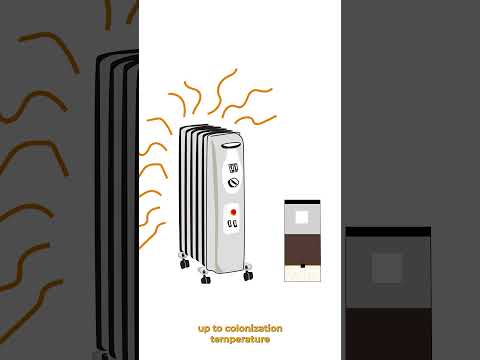
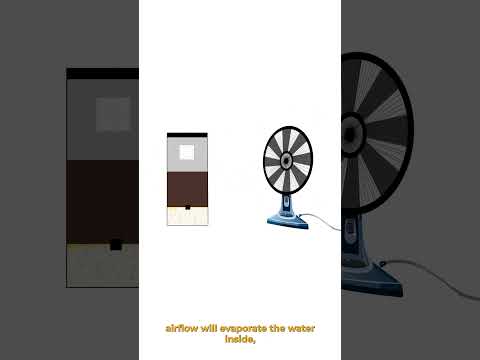
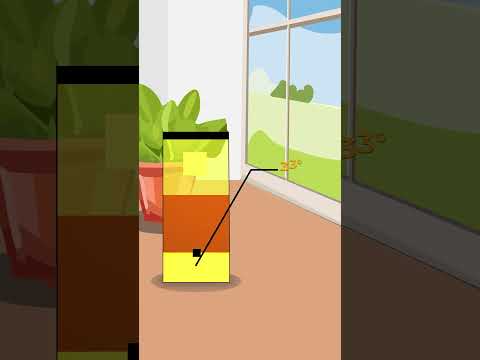
Keep the bag somewhere with a stable temperature, out of direct sunlight and away from any direct heat or cold source. Do not place it on a heat mat, and avoid fully enclosed spaces such as wardrobes, where stale air and trapped humidity can encourage contamination.
If something goes wrong
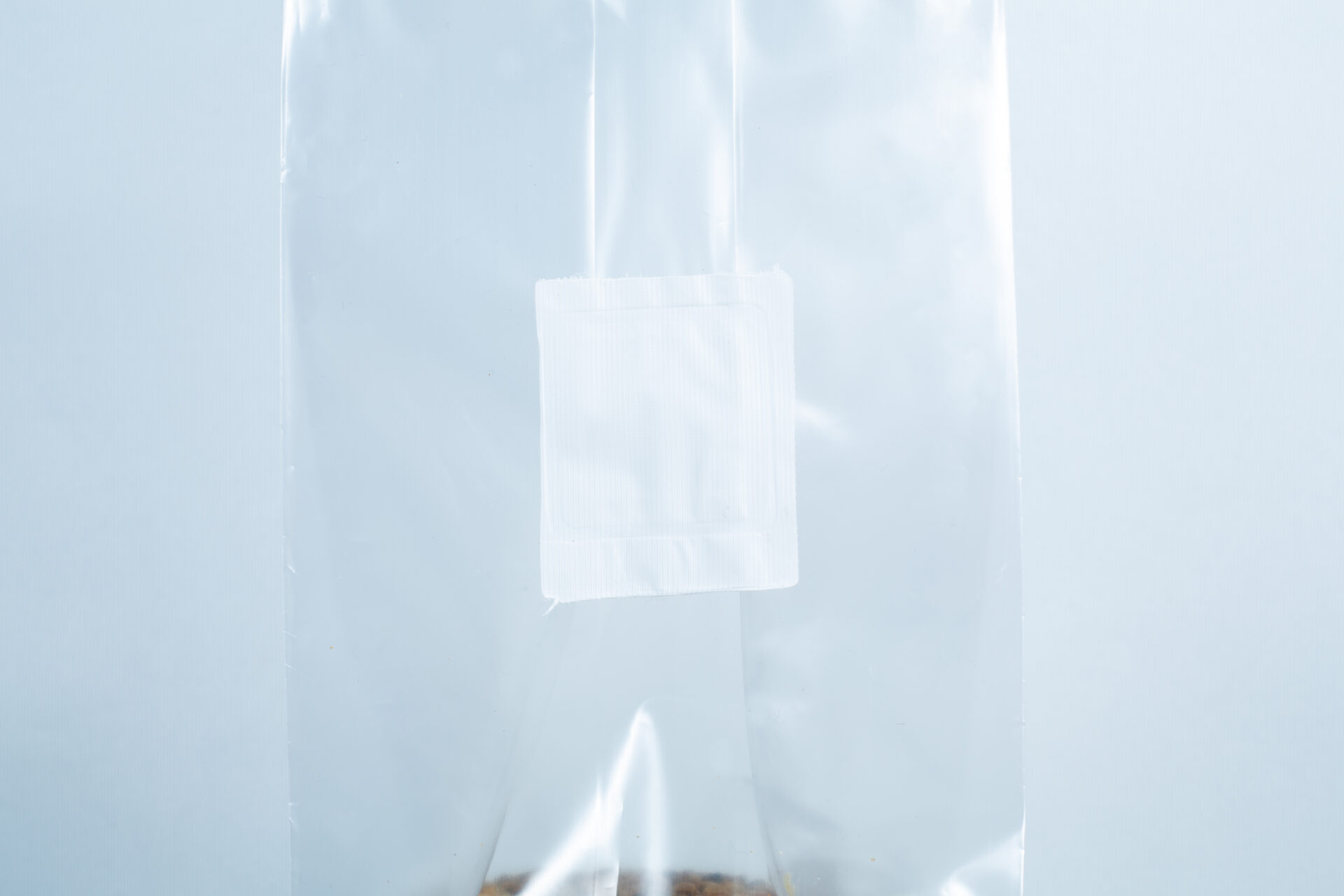
If the bag arrives with visible contamination, or contamination appears during the holding period before you inoculate uptill day 14 from receiving it , contact us with a full photo of the bag showing the air filter, the injection port and the heat sealed section. Refunds/replacement can only be issued for uninoculated bags, which is another reason to check carefully and test your culture before you commit the bag.
If contamination appears after inoculation, during colonisation, please still send us a photo of the bag showing the air filter, the injection port and the heat sealed section, along with the contaminated area. We cannot refund an inoculated bag, but the photos help us track patterns across batches and identify where the problem is likely to have started and guide you so you do not make any mistakes again.
You Might Also Need
- Small Sealing Bag Clips, handy if you don’t use all the spawn in one go, or if you’ve cut a bag open to inoculate with agar and need to reseal it. Please note we cannot accept warranty claims on bags that have been opened.
- Disposable Gloves and Masks, for maintaining sterile conditions in your mycology projects.
- Biodegradable MEA Agar Cups, ideal for testing liquid cultures or spore syringes before inoculating your bags.
- Still Air Box (SAB), if you need a sterile workspace.
- Sterile Water Syringe, if you need to rehydrate the bags.
GENERAL INFORMATION
We use microplastic free Unicorn Bags with this product to ensure cleaner and safer cultivation. Unicorn is the only bag in the world tested by Eurofins, a third party lab in Europe, passing the stringent EN 1186 and US FDA 1520 standards for plastic migration into the substrate. Unicorn PP bags were tested at the highest level of 121 degrees Celsius for 3.5 hours. No PE bags or other manufacturers PP bags have achieved this important food safety criteria, so rest assured you are not getting any microplastics from our bags.
WHY CHOOSE US
100 percent clean, reputable grains from a supplier we trust, never sprayed with fungicide.
Soaked for 12 hours in chlorine free water.
Washed 5 times for thorough cleaning.
5 percent gypsum added to prevent clumping while providing calcium and sulphites and helping the grains break up easily.
Simmered to soften the grains and make them easy for the mycelium to digest.
Cooled slowly over 5 hours to prevent the autoclave from drawing in contaminated air when equalising pressure.
Autoclave tape used to confirm the sterilisation process has been effective.
Grains prepared at an optimum field capacity moisture of around 50 to 55 percent.
Self healing injection port included with every bag.
Thorough inspection of every bag before shipping.
These pre sterilised grain bags are assured contaminant free due to a sterilisation process at 15 psi in a commercial autoclave. Under certain circumstances there can still be contamination, which could have occurred while the product was being shipped. In the unlikely event that you see contamination that may be due to shipping, please send us a photo within 2 weeks of receiving the item for a full refund or replacement.Please ensur ethe bag is not inoculated.
BAG DETAILS
Brand: Unicorn USA, 4T-Inj, with self healing injection port.
What’s Not included
This item does not include mycelium (LC, Spore syringe, Spores or agar plate) or needle.
FAQ
What are white marks on the grains?
We use calcium carbonate in the grains, it is like a white powder. Sometimes you will see white marks in your grains, they are completely harmless and nothing to worry about.
What is the grainy substance at the bottom of my grains?
That is gypsum, a supplement we add so your grains break up easily while providing calcium and sulphites. It sometimes settles at the bottom and is completely harmless.
Why do I see condensation?
Condensation happens due to the temperature difference between the bag and the outside. Mix the bag thoroughly and the moisture will be reabsorbed by the grains. If the grains still seem moist, leave it 1 to 2 days before inoculation or reduce the culture injected.
How long do grains take to colonise?
Generally 8 to 30 days. Colonisation is slower in winter than summer, and different species grow at different rates. Reishi may fully colonise a 1kg bag in about 8 days, while Almond mushrooms can take up to 30. Most mycelium thrives at 22 to 24°C. If hotter than this contamination can take over.